
The days of simply putting out a sign and hoping for the best are long gone. Today's buyers expect an experience, not just a walkthrough. A generic open house often attracts casual neighbors and tire-kickers, wasting your valuable weekend. But a strategic, well-executed open house becomes a powerful lead generation engine, positioning you as a market expert and attracting serious, qualified buyers.
This guide breaks down 8 innovative open house ideas for realtors designed to transform your events from passive showings into active business builders. We’ll cover everything from digital-first strategies to hyper-local community events, complete with actionable steps and real-world examples you can implement this weekend.
What is the main purpose of an open house?
While the obvious goal is to sell the specific property, a modern open house serves a much broader purpose. It's a prime opportunity for lead generation (for both buyers and potential sellers), networking with other agents, demonstrating your local market expertise, and building your brand in the community. A successful event can fill your pipeline for months to come.
To truly reinvent your open house and boost turnout, consider strategies detailed in this guide on How To Attract More People To An Open House. Ready to make your next open house your most successful one yet? Let's get started.
1. Interactive Virtual Tour & Live Chat Open House
Merge the physical and digital worlds with a hybrid open house that caters to everyone, from the casual drive-by visitor to the serious out-of-state buyer. This modern approach combines a traditional in-person event with a synchronized virtual tour, complete with a live chat function. It’s one of the most effective open house ideas for realtors looking to maximize reach and capture leads from every possible channel.
How Does a Hybrid Open House Work?
It's simpler than it sounds. While you host the in-person open house, you also run a live stream or host a pre-recorded 3D tour (like Matterport) that online visitors can explore. The key is the live chat feature, where you or a team member can answer questions in real-time from virtual attendees.
Physical visitors can also engage with the digital assets. By placing QR codes on signage throughout the property and on the "For Sale" sign out front, you can direct in-person guests and even curious neighbors to the virtual tour, property details, and your contact information.
Actionable Steps for a Successful Hybrid Event
- Promote Everywhere: Announce both the physical and virtual open house links at least 48 hours in advance on social media, in your email newsletter, and on the MLS listing.
- Set Up QR Codes: Create QR codes that link directly to the virtual tour, a pre-registration form, or your live chat. Place them at the entrance, in key rooms, and on flyers.
- Engage Instantly: Use an automated system like DB Marketing Co.'s to send pre-set messages the moment someone joins your Facebook or Instagram live chat. Questions like, "Welcome! What feature of the home are you most excited to see?" can get the conversation started.
- Follow Up Fast: For every lead captured via chat, use an 'I'm about to call' text feature to connect within minutes. This immediate, personal touch is crucial for conversion. To maximize engagement during your virtual open house, learn more about the benefits of Live Chat for Real Estate to capture leads and close deals.
- Repurpose Your Content: Record the live stream and use clips for future social media posts, email campaigns, and video ads. This single event can fuel your content calendar for weeks.
For more powerful ways to attract and convert prospects, check out these other top real estate lead generation strategies.
2. Neighborhood Expert & Local Resource Open House
Transform your open house from a simple property showing into a valuable community seminar. This strategy positions you as the ultimate neighborhood authority by showcasing not just the home, but the lifestyle that comes with it. By providing deep insights into local schools, amenities, market trends, and investment potential, you build immediate trust and attract serious buyers looking for more than just four walls and a roof. It’s one of the sharpest open house ideas for realtors who want to differentiate themselves in a crowded market.

How Does a Neighborhood-Focused Open House Work?
Instead of just greeting guests at the door, you create dedicated “information stations” or host brief, scheduled talks about the community. You can have maps, printouts with school ratings, lists of the best local coffee shops, and data on recent comparable sales in the area. The goal is to answer a buyer's unasked questions and demonstrate your hyper-local expertise.
This value-first approach makes asking for contact information feel natural. Guests are more willing to register when they see the tangible information you're offering. This creates a high-quality lead pool of educated, interested buyers who see you as a credible resource, not just a salesperson.
Actionable Steps for a Successful Local Expert Event
- Create Value-Driven Materials: Prepare a "Neighborhood Welcome Packet" with school district info, a map of parks and trails, commute time estimates, and a list of your favorite local businesses.
- Set Up a QR Code Registration: Have a prominent QR code at the entrance that leads to a simple registration form. In exchange for their contact info, offer to email them the full digital version of your welcome packet. This feeds leads directly into your CRM for automated follow-up.
- Host Mini-Sessions: Schedule 5-minute talks every half-hour on topics like, "Understanding Local Property Taxes" or "Top 3 Family-Friendly Activities in the Area." This creates a dynamic, educational atmosphere.
- Leverage Follow-Up Automation: The day after the event, use a system like DB Marketing Co. to send a missed-call text-back to attendees who didn't register. A simple message like, "Hi [Name], thanks for stopping by 123 Main St. yesterday! I forgot to share my guide to the best local restaurants, mind if I send it over?" can re-engage them.
- Segment Your New Leads: Use the data from your registered attendees to create targeted ad campaigns on Facebook and Instagram, showcasing other properties in the same neighborhood or with similar features.
3. Themed Open House Events (Seasonal, Lifestyle, Investment)
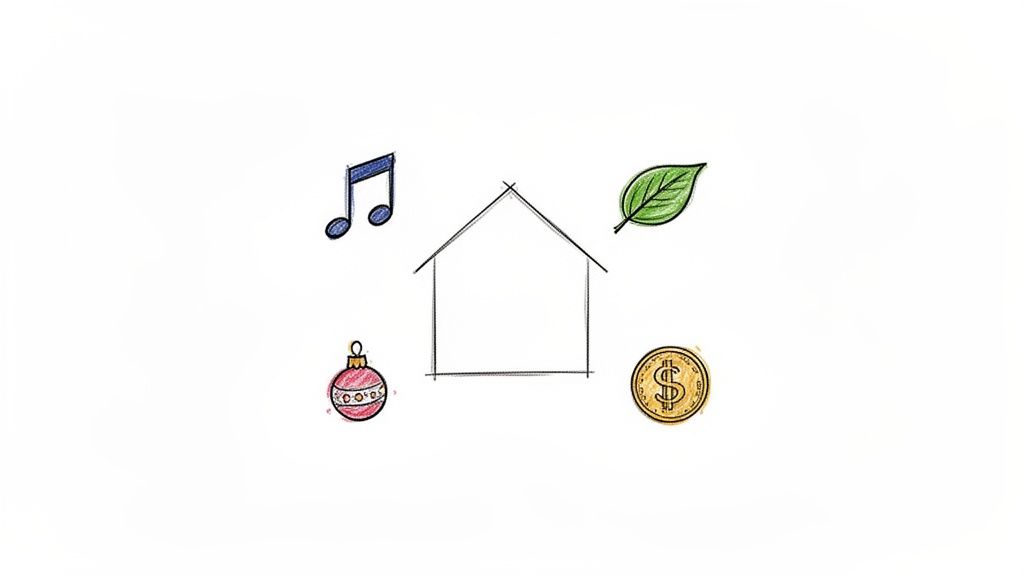
Move beyond the standard cookies-and-brochures model by creating a themed open house that tells a story and attracts a specific buyer. Whether it’s a "Summer BBQ Kickoff" for a home with a great backyard or an "Investment Property Workshop" for a duplex, theming transforms a simple showing into a memorable event. This is one of the most creative open house ideas for realtors because it creates an emotional connection and provides natural, engaging conversation starters.
How Do Themed Open Houses Work?
A themed event aligns the property's key features with a specific buyer persona or lifestyle. For instance, a luxury agent might host an "Entertainer's Dream" open house featuring a local caterer and live music to highlight a home's great room and patio. An investment-focused agent could host a mini-workshop at the property, discussing rental yield and 1031 exchanges, positioning the home as a smart financial asset.
The goal is to immerse potential buyers in a potential lifestyle, making the home feel less like a structure and more like a future they can envision. This approach naturally filters attendees, bringing in more qualified and motivated leads who resonate with the theme.
What should you not do at an open house?
Regardless of the theme, avoid some common mistakes. Don't overwhelm the space with personal items or strong scents (like overpowering air fresheners). Never follow guests from room to room, as it can make them uncomfortable. Most importantly, don't forget the main goal: capturing leads. Have a clear, easy, and non-intrusive system for guests to sign in.
Actionable Steps for a Successful Themed Event
- Match the Theme to the Home: Choose a theme that highlights the property's best assets. A large garden is perfect for a "Spring Garden Party," while a home with smart technology could host a "Future-Ready Home" event.
- Target Your Promotion: Use the theme as the primary hook in your Facebook and Instagram ads. For example, use ad copy like, "Your search for the perfect young professional home ends here. Join us for a 'City Living' open house this Saturday."
- Create Pre-Event Buzz: Post Instagram Stories and Reels showing glimpses of your theme preparations. This builds anticipation and a sense of FOMO (fear of missing out), encouraging higher attendance.
- Segment Your Leads: As you capture visitor information, tag each lead with the event theme (e.g., 'Investor', 'First-Time Buyer', 'Luxury'). This allows for highly personalized follow-up from your ISA team, referencing their specific interests.
- Repurpose Your Content: Use photos and video clips from the event in your social media and email nurture sequences for the next few months. A great shot of guests enjoying the "Fall Family Estate" event can be a powerful marketing tool.
4. Agent Open House 'Trade Show' or Group Event
Transform a standard weekend open house into a bustling real estate marketplace by collaborating with other agents. A group event, where multiple agents host open houses in the same neighborhood or a brokerage showcases several listings at once, creates a high-energy atmosphere that pulls in significantly more foot traffic than a solo event. This is one of the most powerful open house ideas for realtors looking to leverage teamwork for massive exposure and lead generation.
How Does a Group Open House Work?
Think of it as a neighborhood "parade of homes" or a mini trade show. Multiple agents from your brokerage or network coordinate to hold open houses on the same day and time. You can pool marketing resources to create a unified campaign that promotes all participating properties, driving traffic from one house to the next.
This approach creates a sense of occasion and urgency, encouraging buyers to spend an afternoon touring multiple properties. Some brokerages even partner with local lenders, inspectors, and stagers, setting them up at one of the properties to offer advice and create a one-stop-shop experience for potential buyers.
Actionable Steps for a Successful Group Event
- Establish Clear Lead Rules: Before the event, decide how leads will be handled. Will leads be assigned to the agent whose property they first registered at, or will they be shared? Use a centralized check-in system that can automatically route prospects to the correct agent in your CRM.
- Centralize Your Marketing: Create a unified marketing plan 4-6 weeks out. Design cohesive branding for all flyers, social media posts, and signs. Promote the event as a "must-attend" local real estate showcase.
- Streamline Check-In: Use tablets or a QR code system for a single, centralized registration process. This data should instantly populate each participating agent's CRM, ensuring no lead falls through the cracks.
- Implement Instant Follow-Up: With so much activity, it's easy to miss calls or texts. A system like DB Marketing Co.'s can send automated "I'm with a client but will call you right back" texts, ensuring every inquiry receives an immediate response.
- Hold a Post-Event Debrief: Gather all participating agents after the event to review what worked. Discuss lead quality, foot traffic patterns, and visitor feedback to refine your strategy for the next group open house. This collaborative review is key to improving ROI.
5. Open House with Service Provider Partner Booths
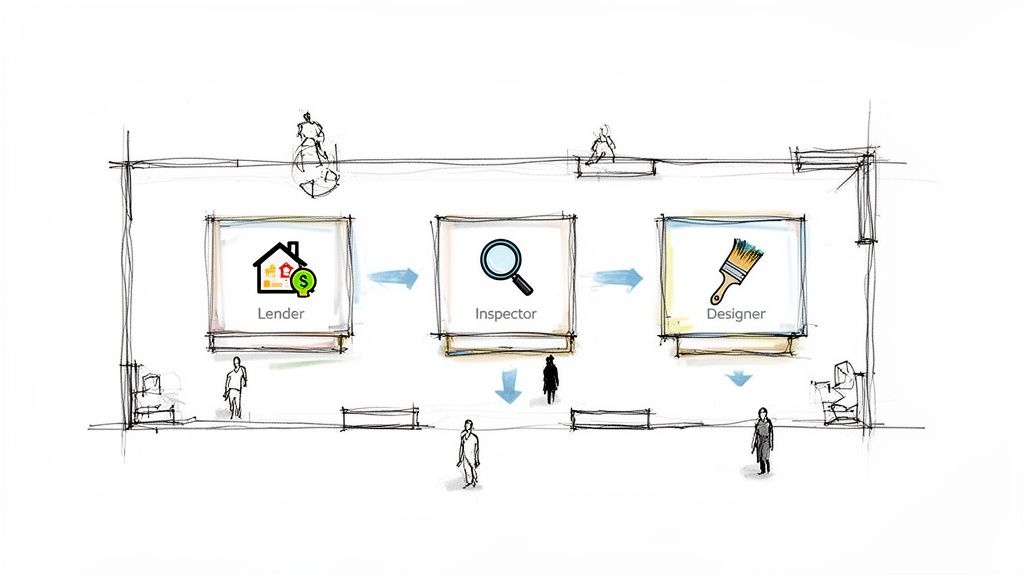
Transform your open house from a simple property viewing into a comprehensive home-buying resource center. By inviting complementary service providers like mortgage lenders, home inspectors, or interior designers to set up informational booths, you offer immense value to attendees. This approach turns a quick walkthrough into an engaging, educational event, making it one of the most strategic open house ideas for realtors who want to become a one-stop shop for buyers.
How Does a Partner-Centric Open House Work?
Instead of just showing the house, you're showcasing the entire home-buying journey. You designate small areas where partners can have a table or booth to answer questions and provide materials. This positions you as a well-connected expert and gives potential buyers the chance to get pre-qualified, ask inspection questions, or visualize renovations on the spot.
For example, a luxury agent might partner with a private lender and a high-end interior designer. An agent specializing in investment properties could bring in a property manager and a real estate tax professional. The goal is to align your partners with the property type and likely buyer needs.
Actionable Steps for a Successful Partner Event
- Choose Strategic Partners: Select professionals who align with the typical buyer's journey: lender, inspector, insurance agent, and maybe a contractor or designer. Ensure they are reputable and that you have a good working relationship.
- Create a Simple Agreement: Before the event, clarify lead ownership and follow-up protocols. Will you share all leads, or will partners only get the contacts they personally make? Who follows up first? It's crucial that you capture every attendee's information upon entry to maintain control.
- Keep the Focus on the Property: Ask partners to tailor their pitch to the home. The lender can have flyers with mortgage scenarios for that specific listing price, and the designer can bring a mood board that complements the home's style.
- Follow Up Immediately: Contact every lead you captured within 24 hours. Your personal follow-up should happen before your partners begin their outreach so you remain the primary point of contact.
- Track Your Results: After the event, analyze which partners generated the most engagement and which leads converted. This data will help you refine your partnerships for future open houses.
For more insights on building powerful referral networks, explore these tips for real estate agent partnerships.
6. Digital-First Open House with Appointment Booking
Flip the traditional open house script by prioritizing a high-quality digital experience first, and then offering in-person tours by appointment only. This modern strategy filters out casual browsers and attracts pre-qualified buyers who have already engaged with the property online. It's one of the most efficient open house ideas for realtors who want to dedicate their time to serious prospects and streamline the showing process.
Why Should I Go Digital-First?
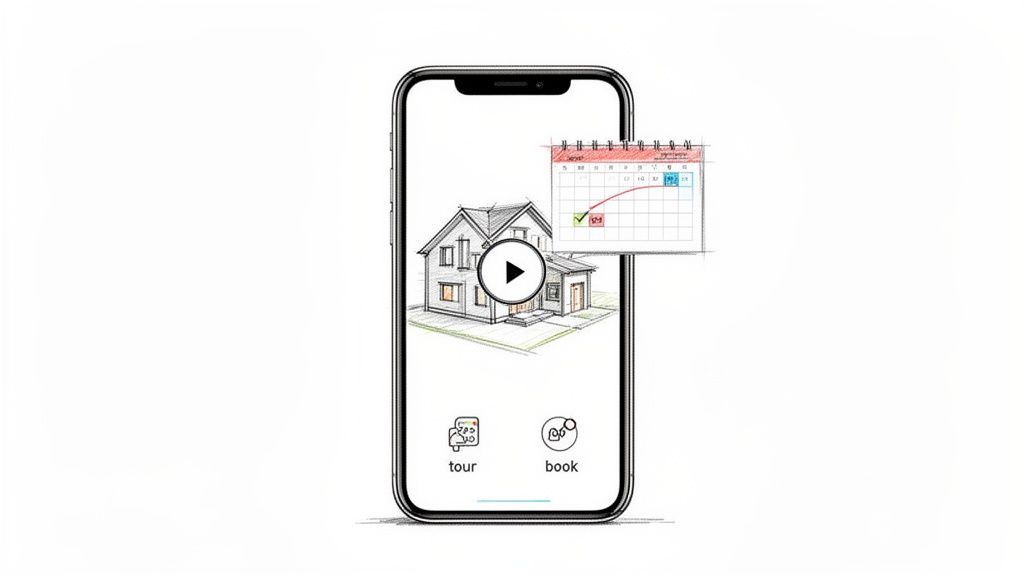
Unlike a public open house, this method leverages a high-definition 3D virtual tour (like Matterport) as the main event. Prospective buyers explore the home at their leisure from anywhere in the world. After they've toured virtually, a clear call-to-action prompts them to book a private, in-person viewing. This pre-qualification step ensures that anyone who walks through the door is genuinely interested and has already seen the layout and key features. This model is a standard for luxury platforms like Sotheby’s International precisely because it respects both the seller's privacy and the buyer's time.
Actionable Steps for a Successful Digital-First Event
- Invest in a Professional Tour: A grainy, phone-shot video won't work. Hire a professional for a high-quality 3D virtual tour. This is the first impression, so it must be flawless to drive conversions.
- Integrate Smart Booking: Use a system that allows viewers to book an appointment directly from the virtual tour page. Systems like DB Marketing Co.'s can capture these high-intent leads and automate initial follow-ups.
- Create Strategic Scarcity: Don't offer unlimited viewing times. Provide 2-3 specific time blocks per week for private tours. This signals that the property is in demand without appearing desperate.
- Follow Up with Precision: When someone books a viewing, send a personalized confirmation text or email within the hour. Mention a specific feature from the virtual tour and ask if they have any initial questions.
- Retarget Abandoned Tours: Use data from your tour platform to see who started but didn't finish or book. Retarget these individuals on social media with a short video ad of the property, reminding them to book a private tour.
7. Open House with Buyer Education Workshop Series
Transform your open house from a simple showing into an invaluable educational event. This strategy positions you as a trusted advisor by hosting a series of free workshops for potential buyers right inside the property. It’s one of the most powerful open house ideas for realtors who want to attract high-intent buyers and build a pipeline of nurtured, loyal clients.
Instead of just showing rooms, you're solving problems. By covering topics like the mortgage pre-approval process or home inspection fundamentals, you attract serious buyers who are actively seeking knowledge, leading to a much higher conversion rate than a standard open house.
How Does a Workshop Series Open House Work?
This approach turns a one-time event into a multi-touchpoint campaign. You host short, focused workshops at the property on different days or times, each tackling a key stage of the home-buying journey. For instance, one Saturday could be 'First-Time Buyer Fundamentals,' and the next could be 'Mastering Your Mortgage Application.'
Attendees register for the free workshops, giving you their contact information. This allows you to build an email list of engaged, education-seeking buyers who see you as a resource, not just a salesperson. The property itself serves as the perfect, tangible backdrop for these educational sessions.
Actionable Steps for a Successful Workshop Series
- Partner for Credibility: Team up with a local mortgage lender, home inspector, or real estate attorney to co-host a session. Their expertise adds immense value and credibility, making your event a must-attend for serious buyers.
- Promote Well in Advance: Start promoting the workshop series 3-4 weeks out. Use a multi-channel approach including targeted Facebook ads, your email newsletter, and local community groups to maximize registrations.
- Capture Leads at Registration: Use a simple online form (like Google Forms or Eventbrite) for attendees to register. Make sure to collect names and email addresses to send event reminders and follow-up materials.
- Create a Follow-Up Nurture Sequence: Don't let the conversation end after the workshop. Create a simple automated email series: send a video recap the next day, a related tip three days later, and a showcase of similar properties in a week.
- Engage with No-Shows: Send a recording of the workshop to everyone who registered but couldn't make it. Include a clear call-to-action inviting them to schedule a private tour of the property.
8. Pre-Listing Open House for Agent Networking & Buyer Pre-Qualification
Generate serious buzz and potentially secure an offer before your listing even hits the market. A pre-listing open house is an exclusive preview event held 24-48 hours before the property goes public, targeting other agents, past clients, and pre-vetted buyers. This strategic approach is one of the most powerful open house ideas for realtors aiming to create an atmosphere of scarcity and exclusivity.
Unlike a public open house, this private showing allows you to control the quality of attendees, gather valuable early feedback, and build a list of highly qualified prospects from the very start. It positions the property as a premium opportunity that savvy buyers and agents get to see first.
How Does a Pre-Listing Preview Work?
This isn't your typical weekend open house. It's a curated event, often positioned as an "Agent Preview," "Broker's Open," or "VIP First Look." You personally invite a targeted list of top-performing agents from your market and your own sphere of influence. This not only showcases the property but also strengthens your professional network.
The goal is twofold: get the property in front of agents who may have the perfect buyer waiting, and create social proof. When the property launches publicly, you can truthfully state, "We've already had significant interest and early showings," which can motivate buyers to act quickly.
Actionable Steps for a Successful Preview Event
- Curate Your Guest List: Send personalized invitations 5-7 days in advance. Target top local agents, your most loyal past clients, and any buyers you've pre-qualified who might be a good fit. Emphasize the "exclusive first look" angle.
- Capture Every Lead: Use a simple registration form (even if attendance is just an RSVP) to collect contact information. This ensures you can follow up effectively with everyone, whether they attend or not.
- Gather Intelligence: Use this opportunity to get honest feedback from other professionals on pricing, staging, and presentation. Document common questions and objections to refine your public marketing materials and talking points.
- Create Urgency: Follow up with non-attendees within 24 hours, letting them know they missed a great preview and offering a private tour before the public launch. Leverage any early interest or offers as social proof in your public marketing.
- Network Strategically: Use the event to build relationships. A well-executed agent preview can lead to future co-broking opportunities and referrals, making it a win beyond just this single listing.
8-Point Open House Ideas Comparison
| Open House Type | Complexity (🔄) | Resource Requirements (⚡) | Expected Outcomes (📊) | Ideal Use Cases | Key Advantages (⭐) |
|---|---|---|---|---|---|
| Interactive Virtual Tour & Live Chat Open House | 🔄 High — streaming, synced QR experience, moderated chat | ⚡ Moderate–High — streaming kit, mobile tours, trained staff, CRM integration | 📊 Strong digital lead capture; multi-channel engagement and measurable metrics | Remote buyers, luxury listings, broad geographic reach | ⭐ High lead volume & rapid qualification; instant follow-up |
| Neighborhood Expert & Local Resource Open House | 🔄 Medium — research and presentation prep | ⚡ Low–Moderate — neighborhood data, resource packets, registration tools | 📊 Warm, educated leads; improved trust and higher-quality conversions | Agents building local authority; markets where neighborhood matters | ⭐ Differentiation and long-term reputation building |
| Themed Open House Events (Seasonal, Lifestyle, Investment) | 🔄 Medium — creative concept and cohesive execution | ⚡ Moderate — staging, themed marketing, event elements | 📊 Targeted, shareable leads and strong social content | Properties with clear buyer personas; social-first campaigns | ⭐ Memorable branding; high social amplification |
| Agent Open House "Trade Show" / Group Event | 🔄 High — multi-agent coordination and lead routing | ⚡ Moderate — shared promotion, centralized check-in, staffing | 📊 Very high foot traffic; lead-sharing opportunities; cost efficiencies | Brokerages or teams seeking scale; neighborhood-wide promotions | ⭐ Volume of leads and economies of scale |
| Open House with Service Provider Partner Booths | 🔄 High — partner coordination and lead-ownership rules | ⚡ Moderate–High — partner booths, agreements, extended schedule | 📊 Deeper engagement; higher-quality, well-qualified leads | Buyer-journey focused events; first-time buyers or complex transactions | ⭐ Comprehensive buyer education; cross-referrals |
| Digital-First Open House with Appointment Booking | 🔄 Medium — professional virtual tour + booking workflow | ⚡ Moderate — 3D tour production, booking system, CRM sync | 📊 Highly qualified appointments; better conversion per showing | Luxury or remote properties; sellers wanting curated visits | ⭐ Efficient qualification; fewer wasted showings |
| Open House with Buyer Education Workshop Series | 🔄 High — multi-session planning and content creation | ⚡ Moderate — speakers, materials, multi-week promotion | 📊 Nurtured, high-intent leads; higher lifetime conversion rates | First-time buyer markets; agents focused on education/nurture | ⭐ Strong trust-building and repeat engagement |
| Pre-Listing Open House for Agent Networking & Buyer Pre-Qualification | 🔄 Low–Medium — invite coordination and timing control | ⚡ Low — targeted invites, RSVP management, brief staffing | 📊 Early buzz and pre-qualified offers; market feedback before public launch | Competitive or luxury markets; listings needing early momentum | ⭐ Creates scarcity, early offers, and high-quality prospects |
Turn Your Next Open House Into Your Best Lead Source
And there you have it, a playbook of fresh, actionable open house ideas for realtors designed to do more than just unlock a front door. We've moved far beyond the traditional "cookies and flyers" model. The modern open house is a strategic event, a powerful branding opportunity, and one of the most effective lead generation tools in your arsenal, but only if you approach it with creativity and precision.
The key takeaway is that an open house shouldn't be a passive activity where you simply wait for people to show up. It's an active, engaging experience you curate. By transforming your event into a neighborhood showcase, a buyer education workshop, or an exclusive agent networking event, you attract a higher caliber of attendee. You're not just selling a property; you're demonstrating your value, expertise, and commitment to the community.
What are the most common mistakes to avoid?
One of the biggest pitfalls is poor follow-up. Capturing a name and email on a sign-in sheet is useless if you don't have a system to nurture that lead immediately. Another common mistake is failing to match the open house strategy to the property. A luxury home might benefit from a digital-first, appointment-only approach, while a starter home is perfect for a buyer education workshop. Always align your strategy with the target audience.
Ultimately, the best open house ideas for realtors are the ones that are executed flawlessly from promotion to post-event follow-up. This is where many agents drop the ball. You can host the most incredible themed event, but if you're manually trying to text and email every attendee afterward while also managing your other clients, valuable leads will inevitably slip through the cracks. The energy and momentum you build during the open house will fade without a rapid, consistent, and personalized follow-up system.
That's the final piece of the puzzle: execution at scale. Your goal isn't just to have a busy open house; it's to convert that traffic into tangible business. Think of your open house as the top of your funnel. The strategies in this guide will help you fill it with qualified prospects. But a powerful system is what ensures those prospects move through the funnel to become closed deals, turning a weekend event into a predictable and profitable part of your business.
Ready to pair these powerful open house ideas with a marketing and lead management system that never misses a beat? DB Marketing Co. provides the automated lead capture, instant text follow-up, and ISA qualification you need to convert attendees into clients without lifting a finger. Stop letting hot leads go cold and see how our system can help you scale your business at DB Marketing Co..